Chimpanzee trekking in Nyungwe costs roughly USD 250 per person, requires a start around 5:00 a.m., and offers a genuinely less predictable sighting than gorilla trekking.
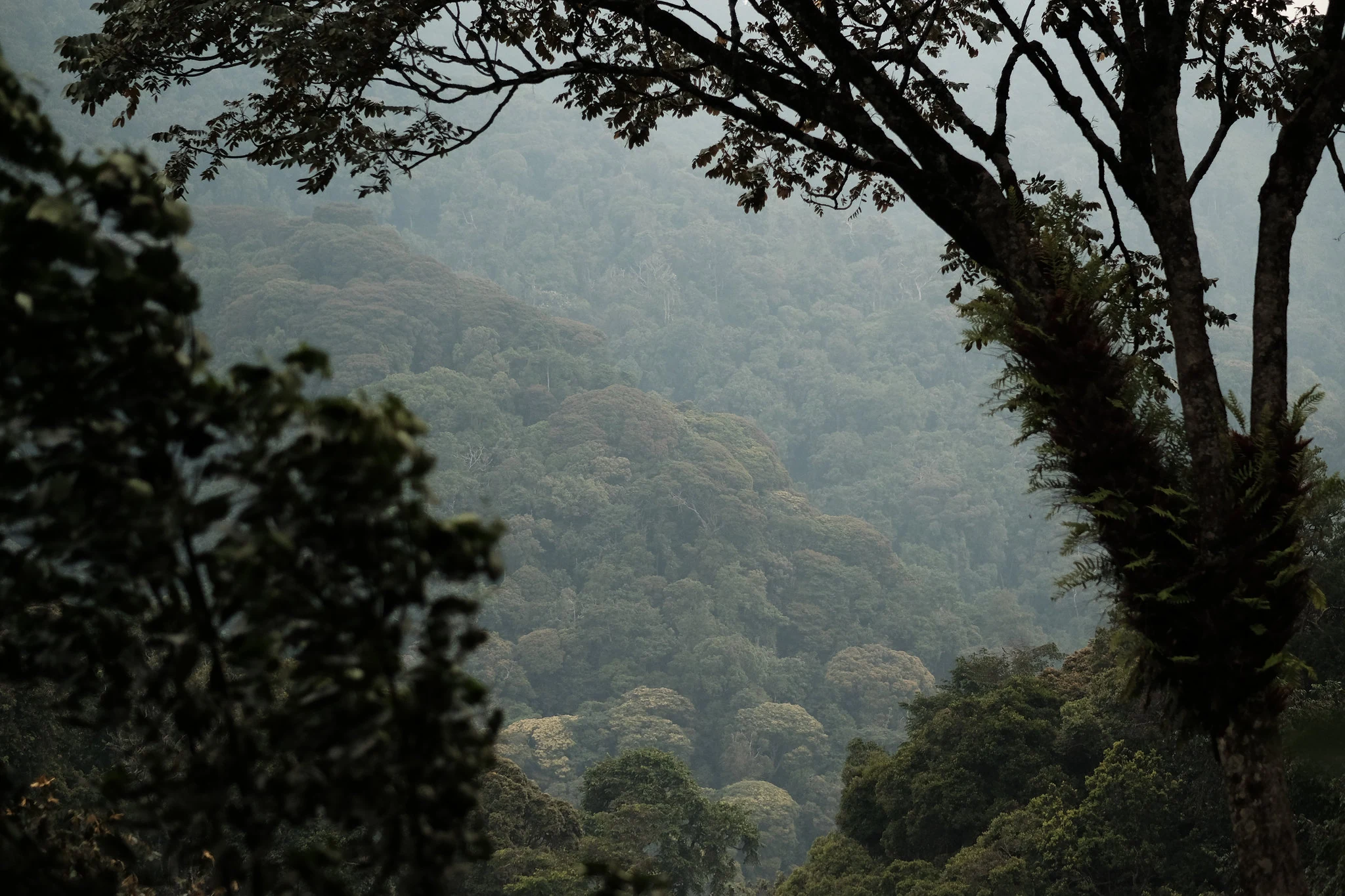
Only two of Nyungwe's estimated 500 chimpanzees are organised into habituated troops available for tourist treks. We set this expectation clearly with every client: this is a real, wild trekking experience with a meaningfully different risk profile from gorilla trekking, not a guaranteed encounter.
Why it differs from gorilla trekking
Gorilla families move relatively short distances day to day and are tracked each morning by rangers ahead of tourist visits, giving guides strong intelligence on location before groups set out. Chimpanzees range considerably further and move faster through Nyungwe's dense, hilly canopy, making both tracking and trekking more demanding and less predictable. Treks often begin before dawn specifically to catch them before they disperse to forage.
A typical trek
An early departure from your lodge, typically 4:30 to 5:00 a.m., to reach the forest as activity begins. Guides use vocalisations and ranger tracking reports to locate the troop; the approach can take under an hour or several hours depending on movement. Once located, visitors are permitted a capped viewing period similar in structure to gorilla trekking's one-hour rule.
Realistic expectations
Sighting success in Nyungwe runs meaningfully lower than gorilla trekking's near-certain outcome. Most treks do result in a sighting, but not every one does, and the physical demands are generally higher. Travellers prioritising a guaranteed primate encounter should weigh gorilla trekking as the more reliable choice. Those drawn to a genuinely wild, less curated experience often find chimp trekking rewarding precisely because of that unpredictability.
Nyungwe's other primates
Should your trek not produce a sighting, or as a separate activity, Nyungwe hosts twelve further primate species, including the Albertine Rift endemics L'Hoest's and Hamlyn's monkeys, alongside black-and-white colobus often seen in large, visually striking troops through the canopy.
Many travellers schedule the Nyungwe Canopy Walk for the same or following day — considerably less strenuous, and offering strong forest views and birdwatching regardless of the chimp outcome.