
Gorilla trekking is not a technical climb, but it is a genuine hike at altitude over unpredictable terrain — and difficulty varies enormously by day.
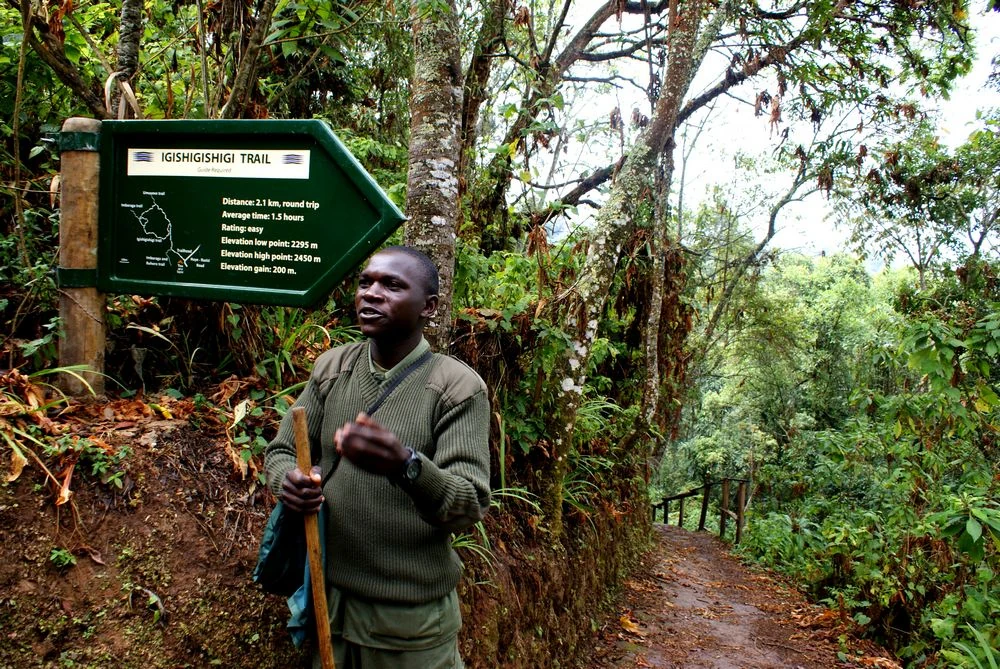
Treks begin at Kinigi park headquarters (roughly 2,400 m) and can climb into bamboo forest and volcanic slopes toward 3,000 m or higher, depending entirely on where your assigned family has settled that morning. Recorded trekking times have ranged from twenty minutes to more than seven hours; most guests reach their family within two to four hours.
The terrain is the more consistent challenge: narrow, frequently muddy trails, steep sections without steps or handholds, thick vegetation including stinging nettles off the main path, and altitude that makes exertion feel harder than the same walk would at sea level.
A reasonable baseline fitness — comfortable with several hours of hiking, some of it steep — is expected, and achievable by most healthy adults without specific training. Travellers with cardiovascular conditions, joint problems or other health concerns should consult their doctor and can request a shorter-approach family at the morning briefing, though this cannot be guaranteed.
The minimum age is 15, strictly enforced at check-in.
Porters
Porters, recruited locally around the park, can carry packs and offer a steadying hand on difficult sections. We recommend engaging one regardless of fitness level — the fee is modest, it materially eases the trek, and porter income is an important part of the local economy around Volcanoes National Park.
The complete packing list
Footwear
- Broken-in, waterproof hiking boots with good ankle support — not the trip for new boots
- Gaiters, to keep mud and debris out on wet, overgrown sections
Clothing
- Long-sleeved shirt and long trousers in neutral colours — nettles and thorny undergrowth make bare skin genuinely uncomfortable. This is a practical requirement, not a style note.
- A warm mid-layer — mornings at altitude are cold even in dry season
- A waterproof, breathable rain jacket — essential in every season
- Thin gardening-style gloves, for gripping branches and protecting against nettles
- A brimmed hat, for sun and rain
Gear
- Daypack with rain cover
- Reusable water bottle — hydration matters more at altitude than it feels like it should
- Walking poles, brought or rented locally
- Insect repellent and sunscreen (the altitude burns even under cloud)
- Dry bag for phones and cameras
Documents and trek-day items
- Passport, required for permit verification at check-in
- Cash for porter fees and gratuities — no card payment on the trail
- Small first-aid kit with blister plasters and personal medication
Photography
- A versatile zoom — gorillas are often close but partially obscured, and changing lenses mid-trek is impractical
- Spare batteries; cold mornings and heavy shooting drain them faster than expected
- Flash is prohibited during the visit, so low-light capability genuinely matters under dense canopy
What not to bring
Bright or white clothing is discouraged, both practically (mud, nettles) and because muted tones are less likely to alarm wildlife. Avoid anything requiring a first outing on trek day — blisters several hours into a remote forest trail are an entirely avoidable problem.
The night before
A good night's sleep matters more than most travellers expect, given the 7:00 a.m. briefing and the demands ahead. Most lodges near the park prepare an early or packed breakfast for trekking guests. Eat properly before departure — the trek can run considerably longer than expected, and there is no guarantee of a meal break during a long approach.