
Rwanda and Uganda are the world's two most accessible mountain gorilla destinations, and neither is objectively superior. They suit different priorities.
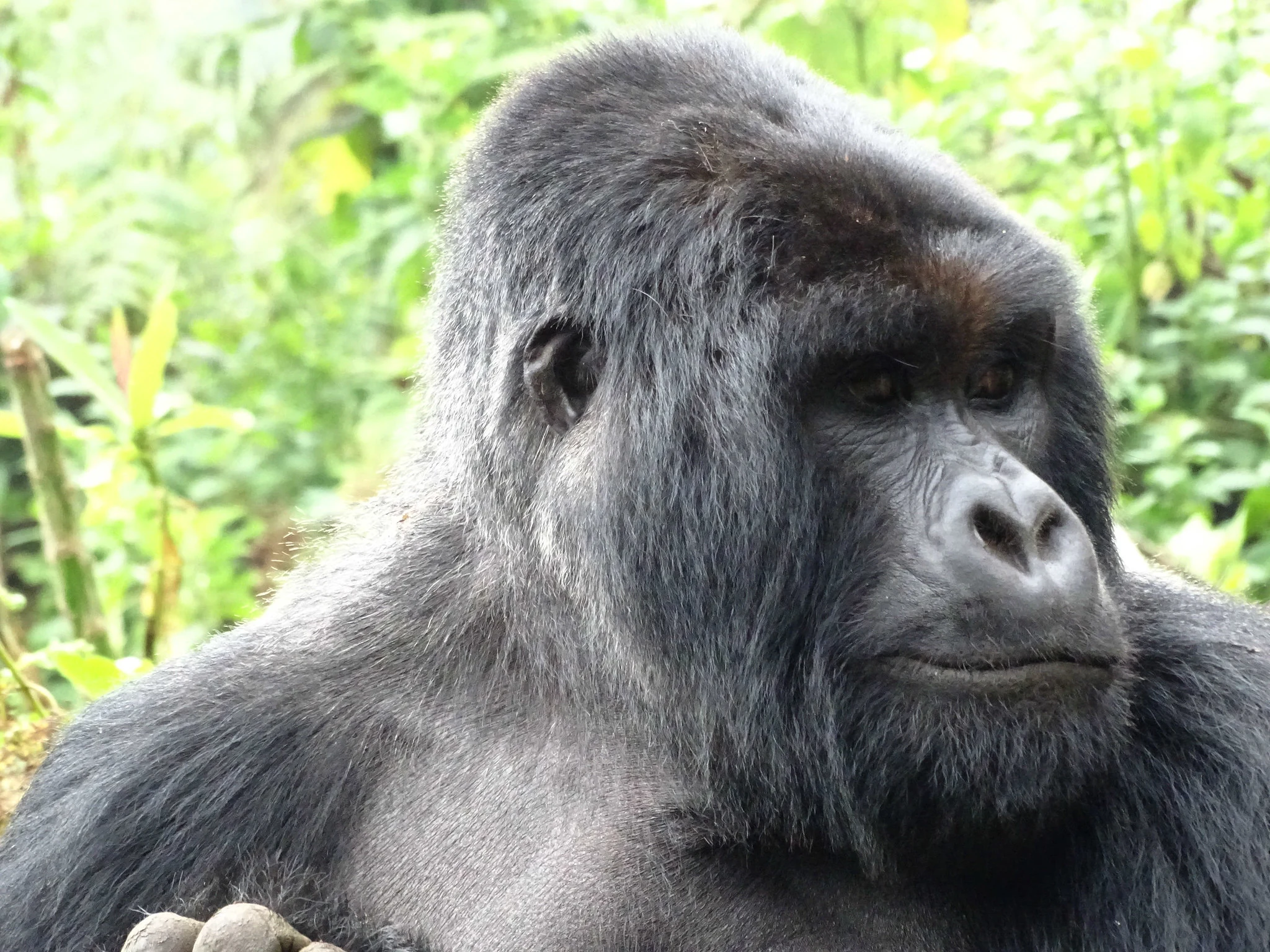
Rwanda's permit costs USD 1,500 against Uganda's USD 800 (or USD 600 in Uganda's green-season months of April, May and November). But Volcanoes National Park sits 2.5 to 3 hours from Kigali International Airport on paved road, while Uganda's Bwindi Impenetrable Forest is typically 8 to 9 hours from Entebbe, or reachable by a shorter light aircraft transfer plus onward road time.
Uganda offers more habituated families across a larger protected forest and is currently the only one of the two to offer a formal multi-hour habituation permit. Rwanda offers the denser concentration of ultra-luxury lodges at the park boundary and more streamlined logistics for travellers prioritising time.
As Rwanda specialists, we've aimed to give Uganda a genuinely fair account below.
Permit pricing
| Destination | Standard permit | Discounted rate |
|---|---|---|
| Rwanda (Volcanoes NP) | USD 1,500 | ~USD 1,050 (Nov–May, with Akagera + Nyungwe) |
| Uganda (Bwindi / Mgahinga) | USD 800 | USD 600 (April, May, November) |
| DRC (Virunga NP) | USD 400 | Park has faced significant tourism disruption |
Rwanda's higher price reflects a deliberate high-value, low-volume strategy. Permit revenue funds anti-poaching patrols and a community revenue-sharing scheme, and Rwanda has held this model since raising permits from USD 750 to USD 1,500 in 2017 — with visitor numbers continuing to grow rather than decline.
Why the gap exists, and what it funds →
Access and logistics
Rwanda's clearest structural advantage is proximity. Volcanoes National Park is 2 to 3 hours from Kigali on fully paved road, meaning you can land, transfer directly to a lodge, and trek the following morning without an internal flight. Bwindi typically requires 8 to 9 hours of road travel from Entebbe, or a light aircraft transfer of roughly an hour plus further ground time.
For a single-country, time-efficient trip, Rwanda's advantage is significant. For travellers building a longer Uganda itinerary already including Queen Elizabeth, Kibale or Murchison Falls, the additional transfer is less of a standalone obstacle.
Families and forest size
Bwindi is considerably larger than Volcanoes National Park and hosts more habituated families across four trekking sectors — Buhoma, Ruhija, Rushaga and Nkuringo — offering greater permit capacity and, for repeat visitors, more variety. Rwanda's families sit in a more concentrated area, which in practice means shorter transfers between lodges and trailheads.
The habituation experience
Uganda offers a formal multi-hour habituation permit in Bwindi's Rushaga sector, allowing up to four visitors to spend up to four hours with a family still being acclimatised — a genuinely different, slower, research-oriented encounter. Rwanda does not currently offer an equivalent at any price. Travellers specifically drawn to that format should weigh it toward Uganda.
Luxury accommodation
This is where Rwanda's advantage is most pronounced for the affluent traveller. Bisate, Singita Kwitonda, One&Only Gorilla's Nest and Wilderness Sabyinyo represent one of the highest concentrations of architecturally distinctive luxury property in African safari travel, virtually all within a short drive of the park gate. Uganda has genuine luxury options in Bwindi too, but the concentration and consistency at the boundary is not yet matched.
Which suits which traveller
Choose Rwanda if: time efficiency matters, this is a focused gorilla trip rather than part of a broader multi-park itinerary, lodge quality and proximity are a priority, or you're including Akagera and Nyungwe for the low-season discount.
Choose Uganda if: budget flexibility on the permit matters, a multi-hour habituation experience is a specific goal, the trip already includes other Uganda parks, or maximum choice among families and sectors is a priority.
Consider both on a longer combined East Africa itinerary — some travellers trek in both countries, treating each as a distinct experience rather than a substitute.