A Rwanda gorilla permit costs USD 1,500 per person in 2026, fixed by the Rwanda Development Board and identical across every licensed operator.
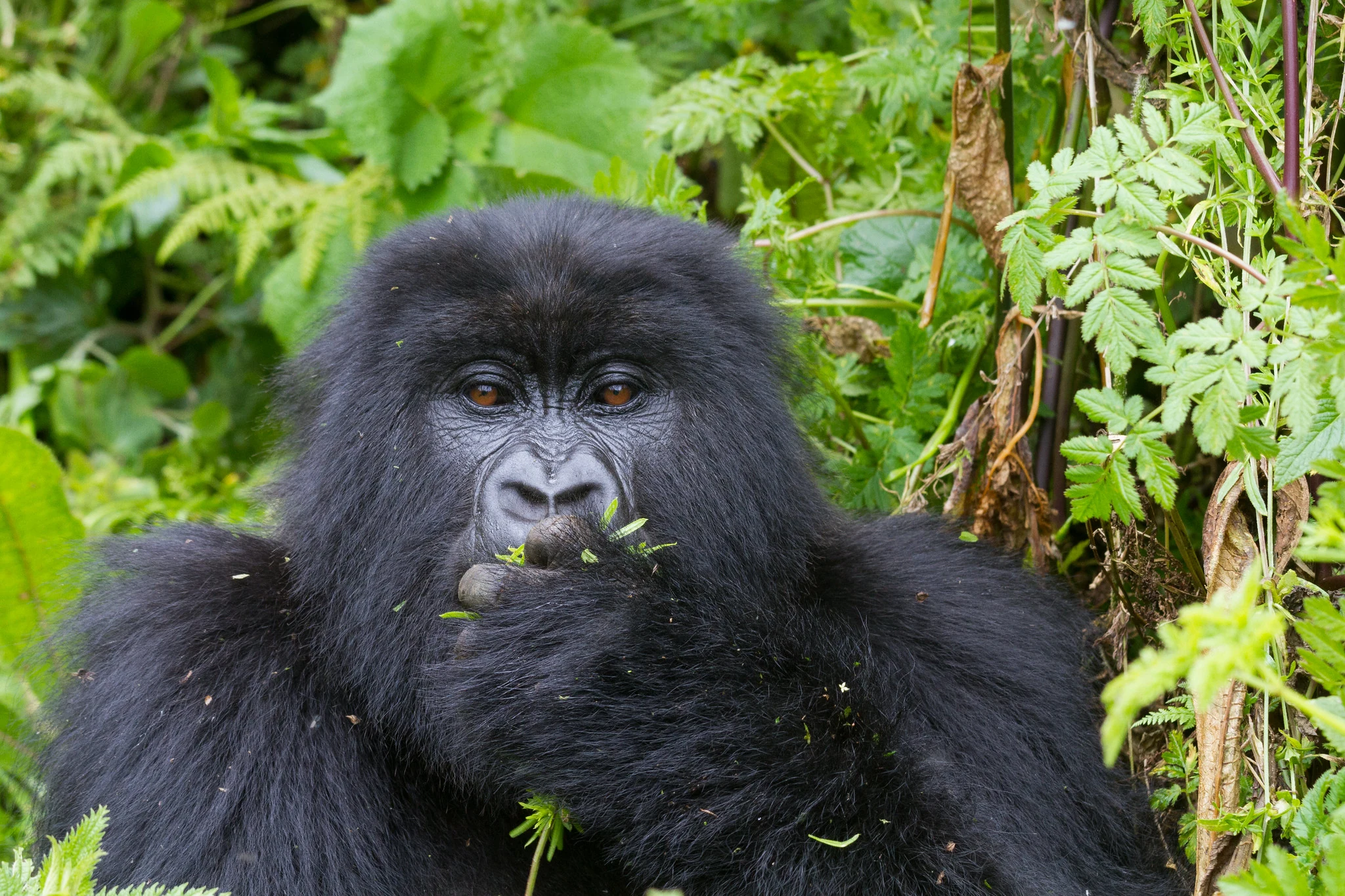
No discount on the permit itself is legitimate at that rate. Only 96 permits are issued per day — twelve habituated families, eight trekkers each — and peak-season dates commonly sell out six to twelve months in advance.
Full pricing table
| Category | Price per person | Documentation |
|---|---|---|
| International non-resident | USD 1,500 | Valid passport |
| Foreign resident in Africa | USD 500 | African residency permit |
| African citizen (non-EAC) | USD 500 | Valid African passport |
| East African Community citizen | USD 200 | EAC national passport |
| Rwandan national | USD 200 | Rwandan national ID |
| Low-season combination rate | ~USD 1,050 | Nov–May, plus 2 nights across Akagera and Nyungwe |
The fee covers park entry, the pre-trek briefing at Kinigi, a guided trek with trained trackers and armed rangers, and the one-hour visit. It does not cover transport, accommodation, porter fees, guiding fees charged by your operator, or gratuities.
How booking actually works
- Confirm your travel window. Availability, not general interest, is the real constraint — so the first decision is a window rather than a fixed date.
- Reserve the permit. Permits can be booked through the Rwanda Development Board's Irembo platform or a licensed operator. Most international visitors book through an operator, since permits, lodges and transfers need coordinating together rather than in isolation.
- Provide documentation for discounted categories. Proof of nationality or residency is required at booking and again at check-in on trek day.
- Pay in full. Given the fixed daily allocation and high demand, full payment is typically required to secure the permit.
- Family assignment on the morning. Which of the twelve families you visit is decided at the 7:00 a.m. briefing, based on that morning's tracking reports and, where possible, guests' stated fitness preference.
How far ahead to book
| Travel window | Recommended lead time |
|---|---|
| Peak (June–September, December–February) | 6–12 months; August and late December sell out earliest |
| Shoulder (March, November) | 3–6 months |
| Low (April–May, October) | 4–8 weeks, though earlier secures better lodges |
The binding constraint is almost always the permit — except at the very top of the lodge market, where Bisate's six villas and Singita Kwitonda's eight suites go first. Treat both as a single decision.
Multiple treks
Trekking more than once requires a separate permit for each day at the same price. Different family assignments across multiple days can sometimes be requested, though not guaranteed.
Travellers researching extended multi-hour "habituation" experiences should note that this product — up to four hours with a family still being acclimatised, capped at four visitors — is currently a Uganda offering in Bwindi's Rushaga sector, not a Rwanda one. Every Rwanda permit at every price tier covers the same one hour.
Cancellation and refunds
Refund and rescheduling flexibility is limited and generally requires at least 30 days' notice. Given the fixed daily allocation, the RDB treats permits as largely non-refundable outside narrow circumstances. Comprehensive travel insurance covering cancellation and interruption is strongly advised on every booking.
Trekking day rules
Permit holders are bound by park regulations designed to protect the gorillas: a minimum seven-metre distance at all times, no flash photography, no eating or drinking near the family, and quiet adherence to ranger instruction throughout the hour. Anyone showing signs of a contagious illness — even a common cold — may be asked not to trek. Mountain gorillas are highly susceptible to human respiratory illness, and a single introduced infection can be fatal to a habituated group. Rwanda enforces this strictly.