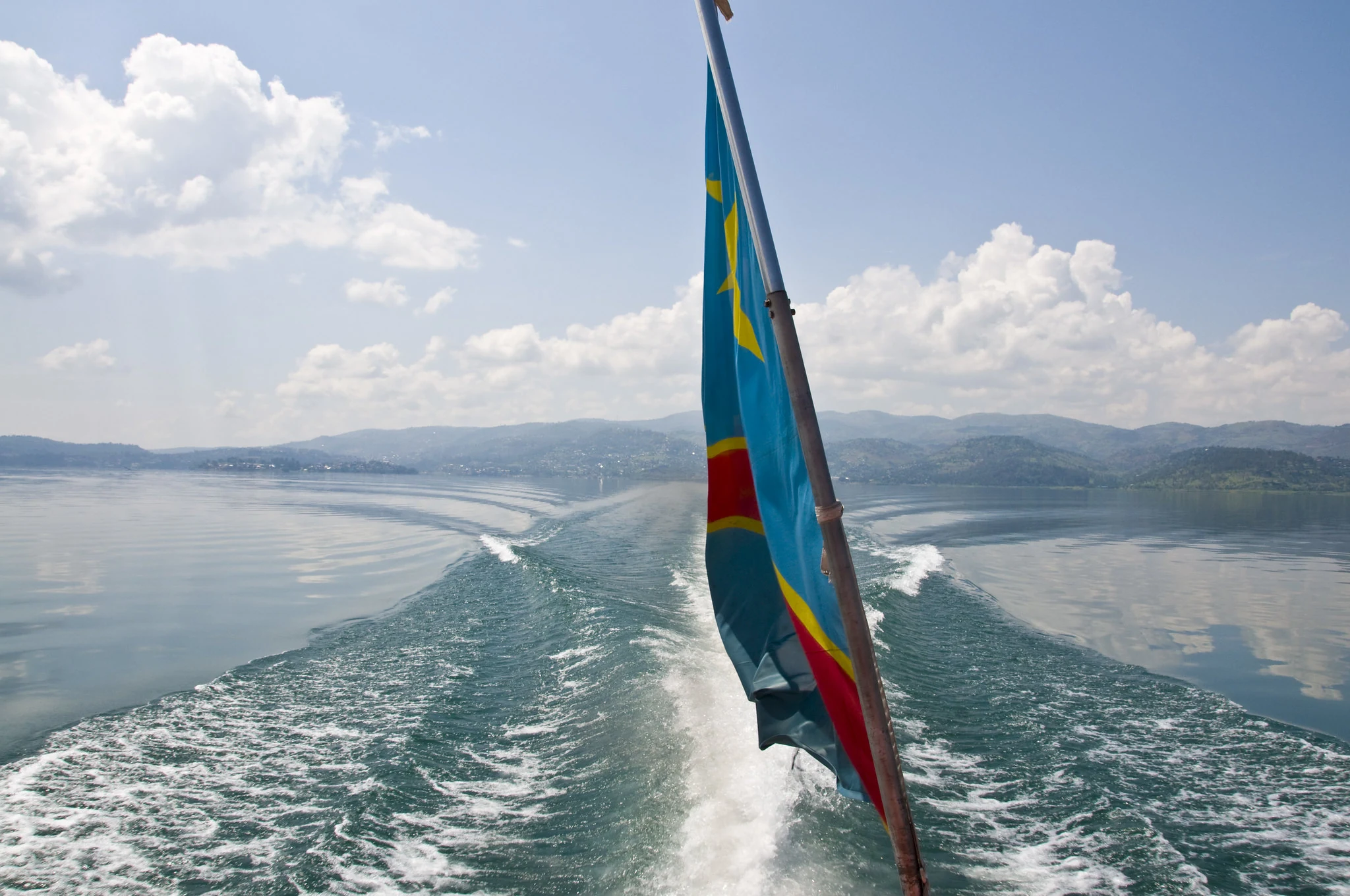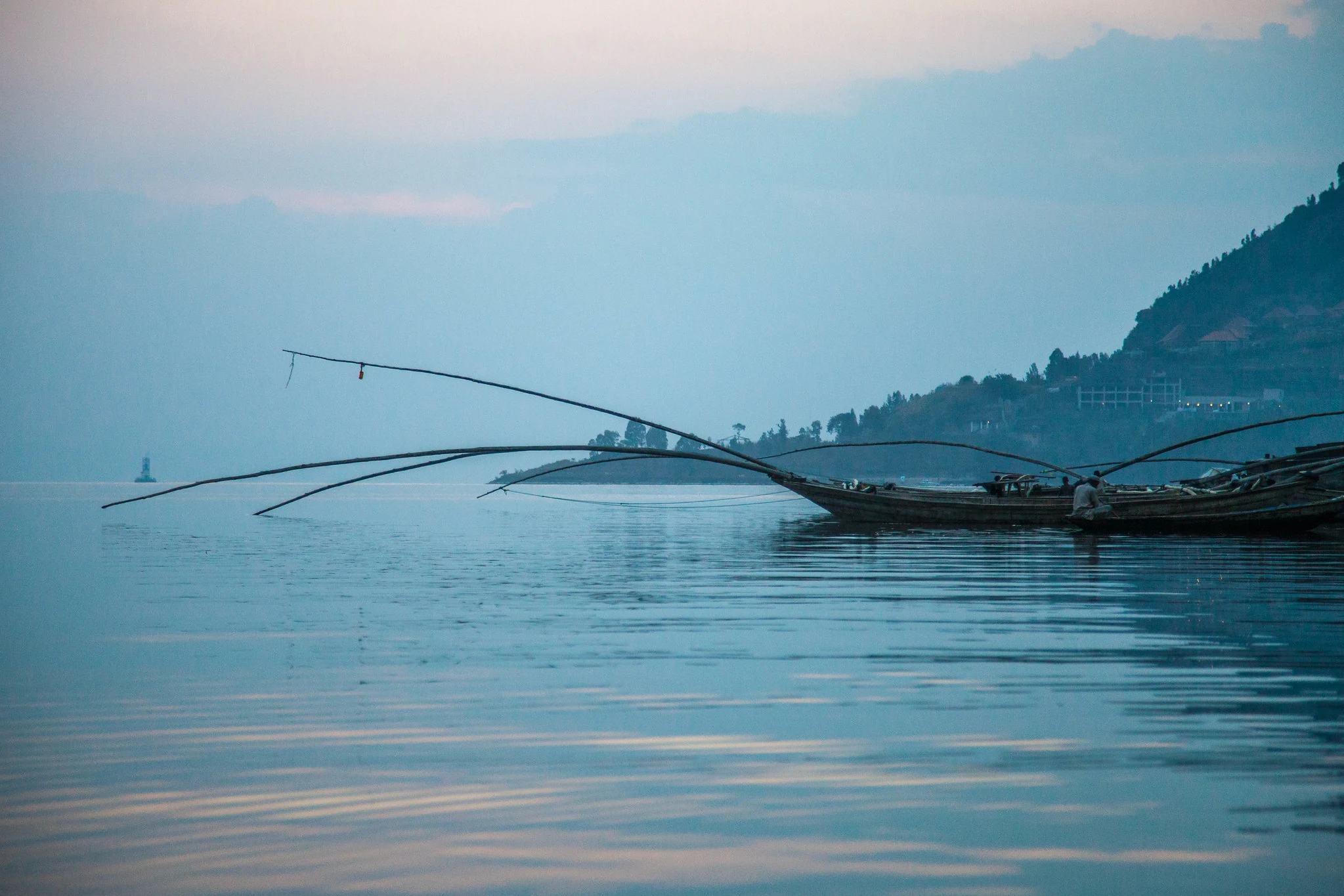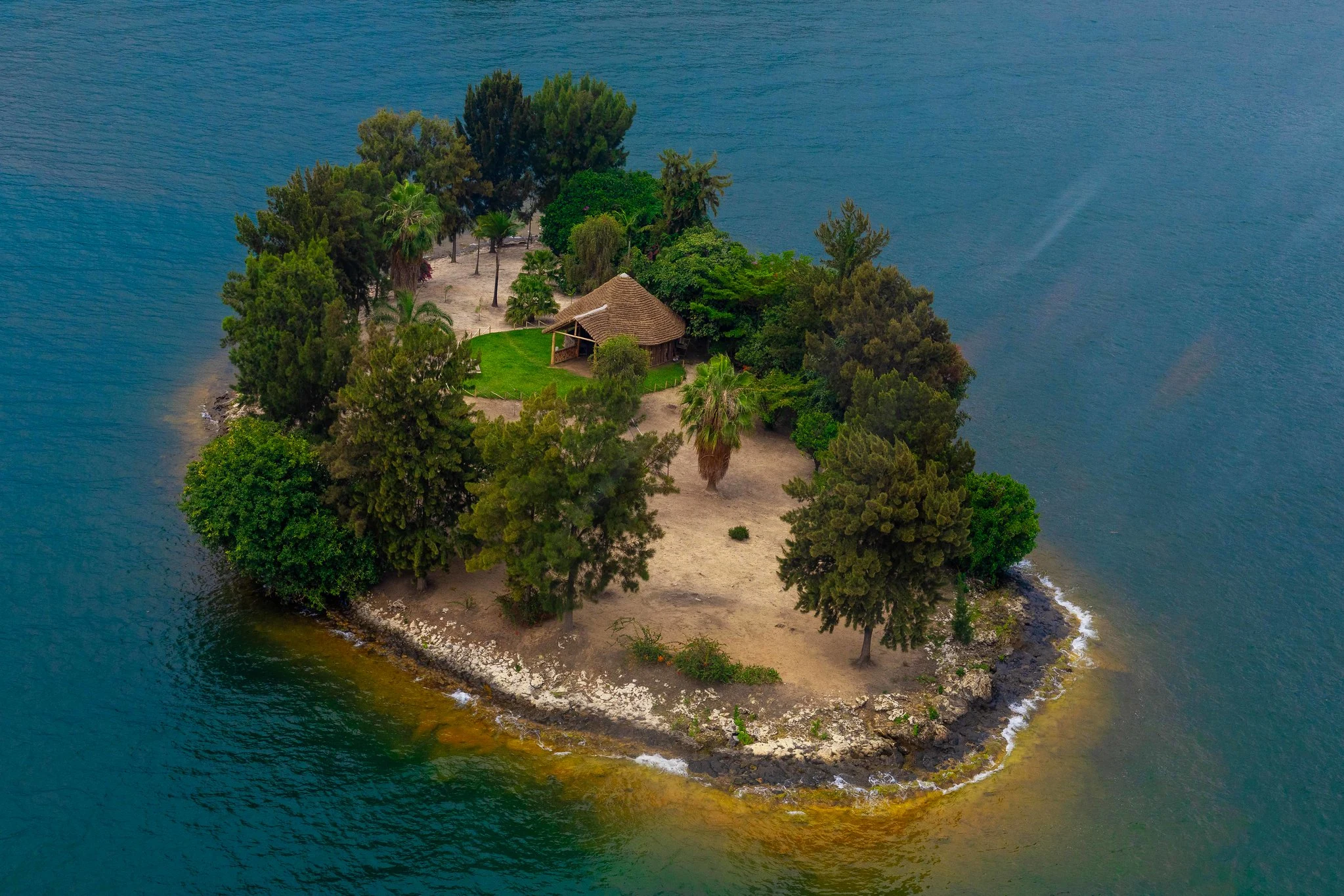
Lake Kivu is Rwanda's largest lake and the sixth largest in Africa, its deep emerald waters ringed by terraced hills and volcanic peaks.
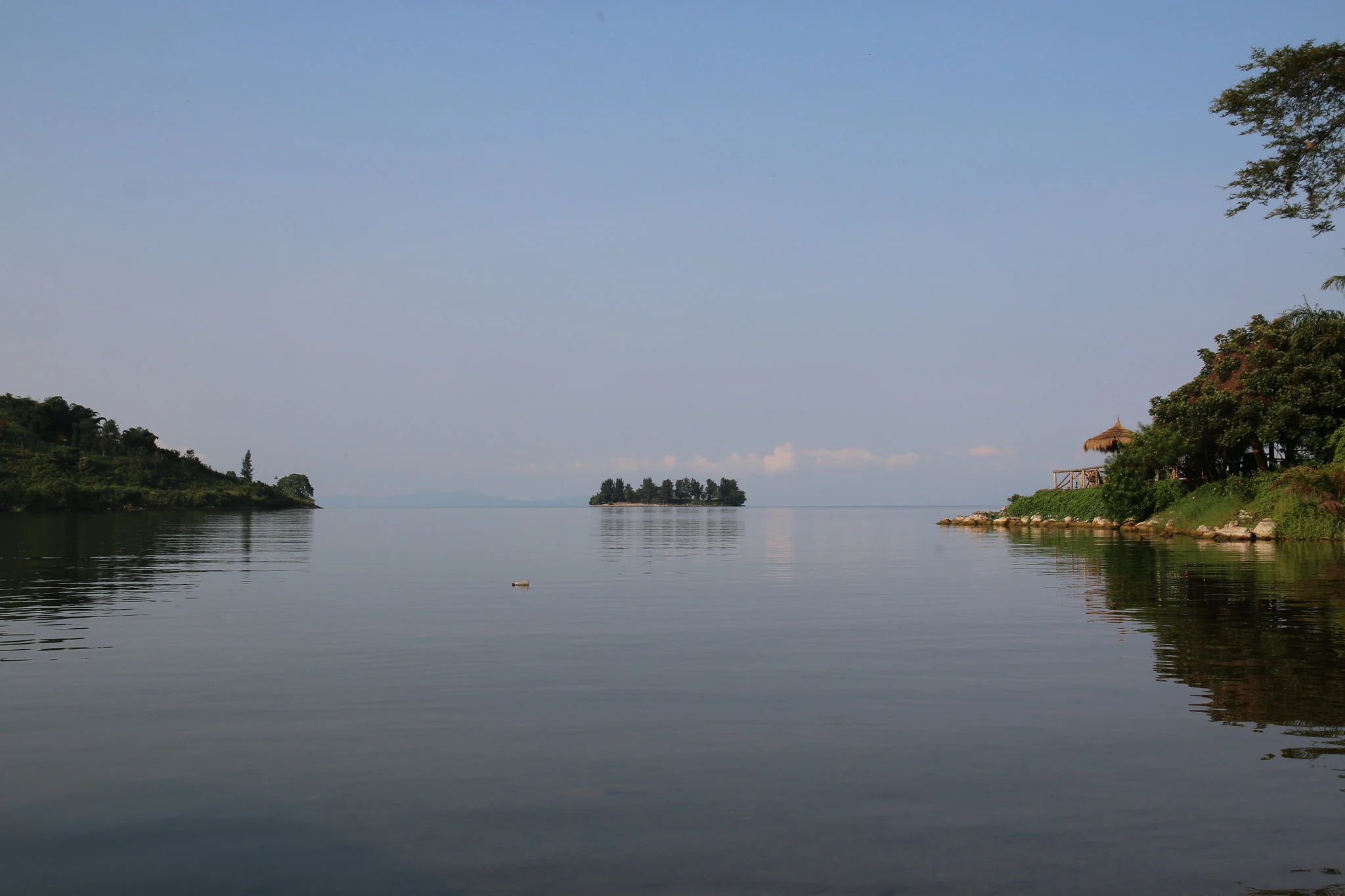
For most of our clients, Kivu functions as the essential counterpoint to a trekking-focused itinerary — the days of genuine rest that follow the physical demands of gorilla or chimpanzee trekking, built around water, quiet and unstructured time rather than scheduled activity.
Where to base yourself
Rubavu (formerly Gisenyi), on the northern shore roughly an hour from Volcanoes National Park, is the most convenient base coming directly from gorilla trekking. Once a colonial-era beach resort, its waterfront retains a faded elegance alongside modern lakeside hotels, a sandy public beach and hot springs.
Karongi (formerly Kibuye), midway along the lake, is widely considered its most scenic town — pine- and eucalyptus-covered hills framing the water, with boat trips to Napoleon Island (home to a large fruit bat colony) and Amahoro Island's seasonal sundowner spot.
Rusizi (formerly Cyangugu), at the southern end, sits closest to Nyungwe — roughly 45 minutes away — making it a natural base for combining a lake stay with the rainforest, though hotel options are more limited.
What to do
Private boat excursions and sunset cruises, kayaking along the shoreline, cycling sections of the Congo Nile Trail, coffee cooperative visits given the region's significant production, and — for travellers interested in more reflective history — Kibuye's genocide memorial church, a quiet, contemplative site above the lake.
The Twin Lakes: Burera and Ruhondo
Considerably quieter and less developed than Kivu, Lakes Burera and Ruhondo sit at the base of the Virungas near Musanze, formed by the same volcanic activity that created the range. Deep blue waters ringed by steep hills and waterfalls, with the volcanoes on the horizon, make them a worthwhile half-day addition for travellers based near Volcanoes National Park — though accommodation and activity infrastructure remains considerably more limited than at Kivu's established resort towns.
Sequencing
Lake Kivu appears in nearly every itinerary we build of five days or longer, positioned directly after trekking as a deliberate pacing device — genuine rest, not simply another activity stop.
See it in the Signature journey →