Nyungwe protects one of Africa's oldest rainforests — a montane ecosystem believed to have survived successive ice ages relatively intact, and correspondingly rich in species found nowhere else.
The park sits roughly 225 kilometres from Kigali, a drive of five to six hours through the tea-growing highlands, or reachable via a 40-minute domestic flight to Kamembe Airport where schedules allow.
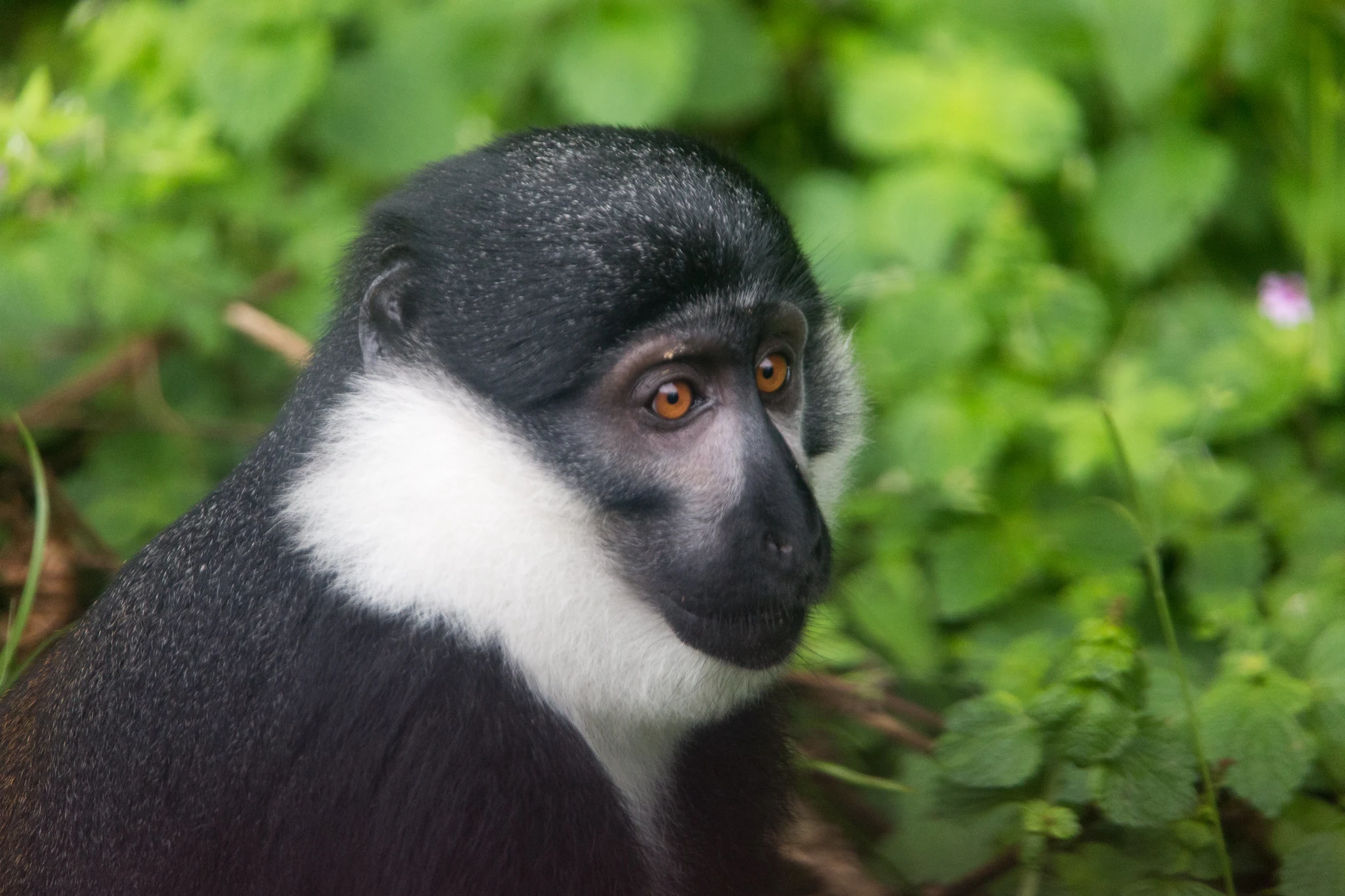
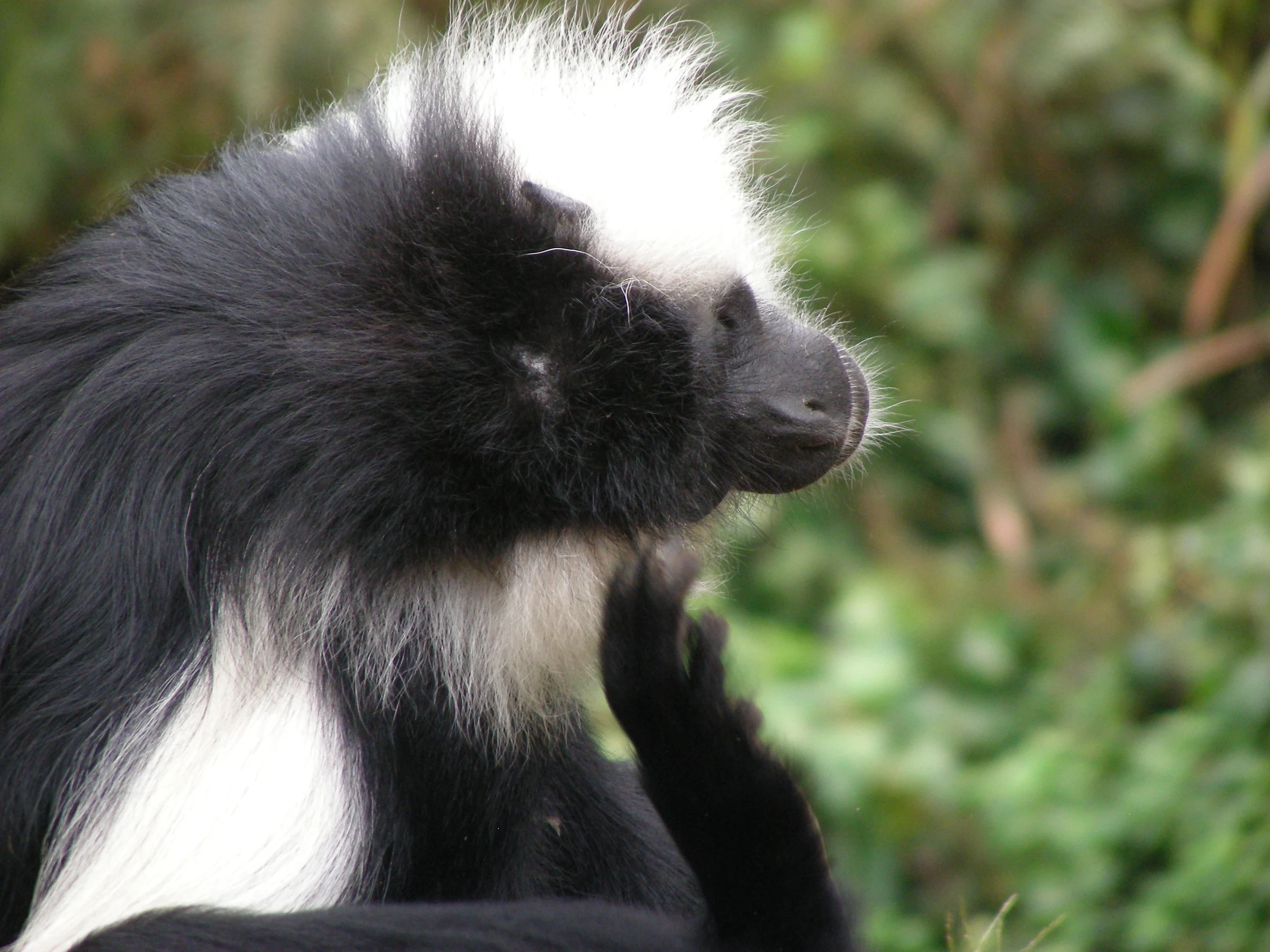
Nyungwe's headline draw is chimpanzee trekking, though its biodiversity extends considerably further: thirteen primate species in total, including L'Hoest's and Hamlyn's monkeys — both Albertine Rift endemics — alongside more than 300 recorded bird species and over 1,000 documented plant species.
Chimpanzee trekking
An estimated 500 chimpanzees inhabit the forest, though only two troops are habituated for tourist visits, and the dense, rugged terrain makes trekking considerably less predictable than gorilla trekking. Treks typically begin around 5:00 a.m., given the chimps' early movement patterns. A permit costs approximately USD 250 for international non-residents.
We set this expectation clearly: a chimpanzee trek is a genuinely different proposition, and travellers should approach it with realistic expectations about sighting probability rather than gorilla-trekking-level certainty. Full guide →
The canopy walk
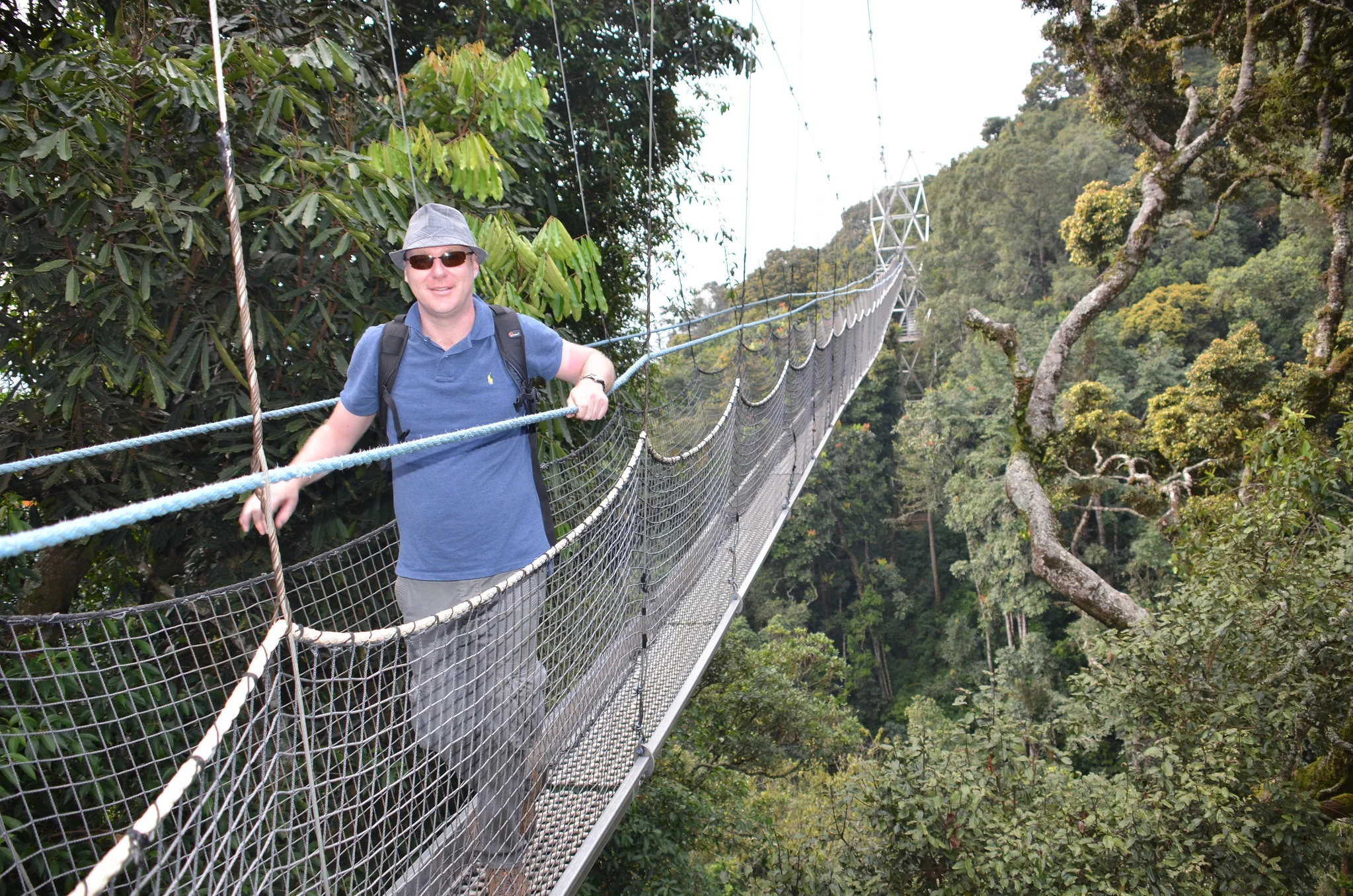
Rwanda's only canopy walk, and one of very few in East Africa: a guided route along a suspension bridge roughly 70 metres above the forest floor, offering treetop views across the canopy, strong birdwatching, and on a clear day sightings of the Congo-Nile Divide beyond. It begins from the Uwinka Visitor Centre and takes approximately two hours including the guided approach.
Birding
With over 300 species and roughly 27 Albertine Rift endemics, Nyungwe is arguably East Africa's finest rainforest birding destination. The Great Blue Turaco — Africa's largest turaco — is the flagship sighting, alongside the elusive Red-collared Mountain Babbler, Grauer's Rush Warbler, and a rich sunbird community. Birding guide →
Trails and tea
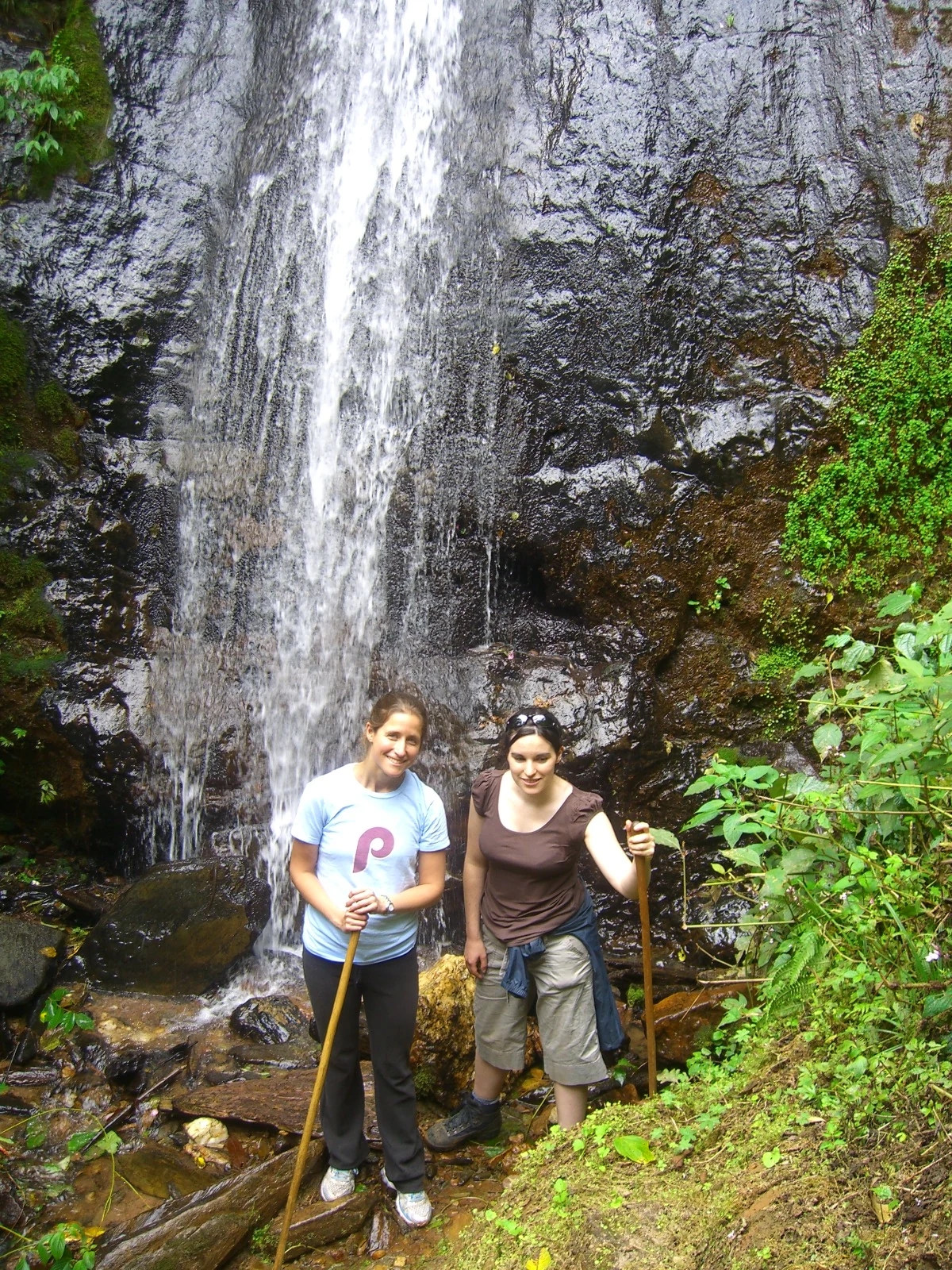
Nyungwe offers roughly nineteen marked trails of varying length, from short nature walks to the multi-hour Isumo Waterfall trail. The Gisakura sector, near the western entrance, sits amid tea country, and several lodges arrange guided estate visits as a lower-intensity complement to a trekking-focused stay.
Where to stay
One&Only Nyungwe House, set among tea plantations bordering the forest, is the destination's clear luxury benchmark. More modest options exist near the Gisakura and Uwinka entrances for travellers prioritising proximity over the highest tier.
Sequencing
Given the drive from Kigali, Nyungwe is best combined with Lake Kivu on the return leg — the Kivu shore sits considerably closer to Nyungwe than Kigali does — a sequencing built into our 7-day and 10-day journeys.