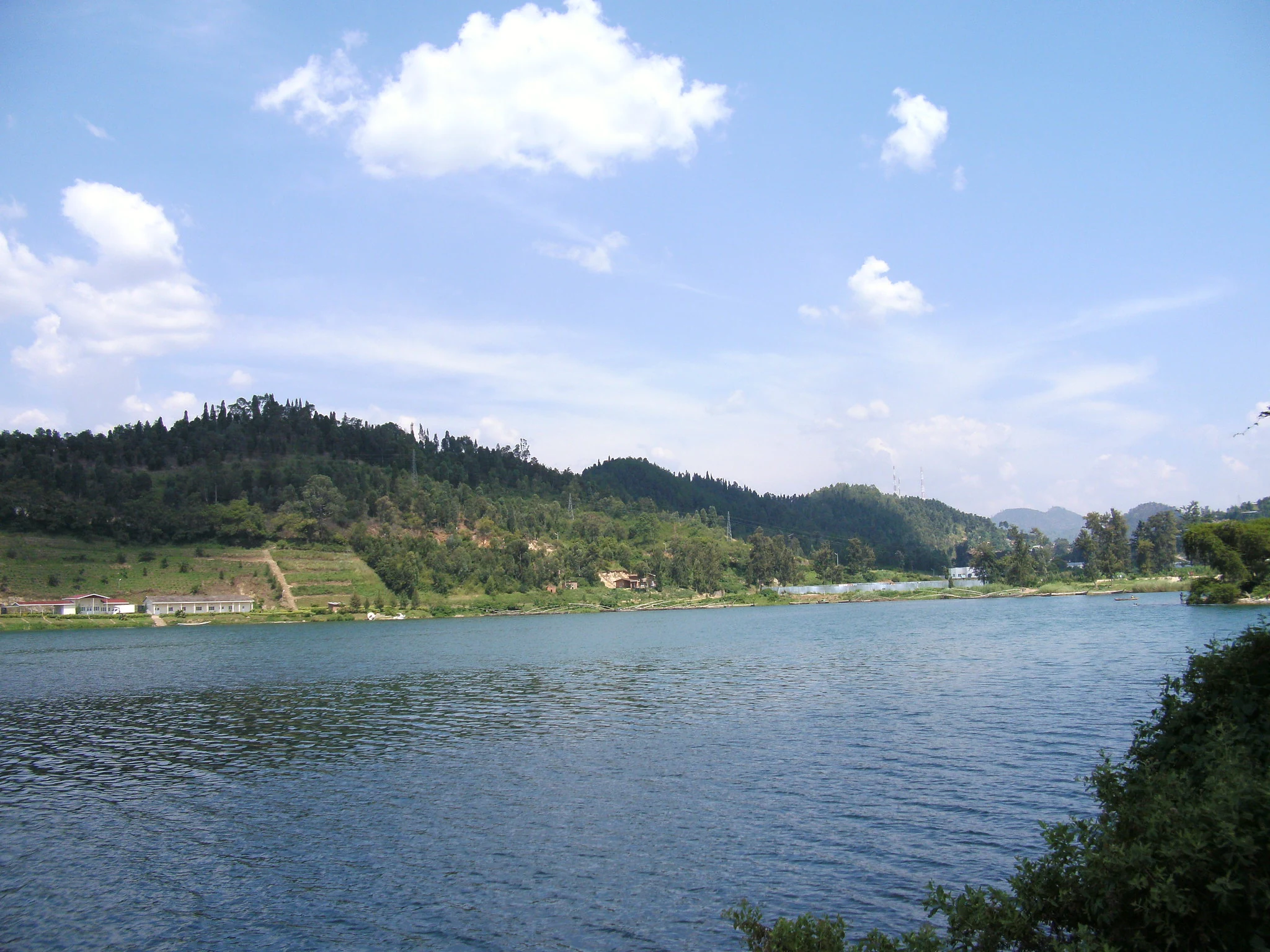
Launched in 2009, the Congo Nile Trail runs 227 kilometres along Lake Kivu's shoreline, from Rubavu in the north to Rusizi in the south.
It takes its name from the watershed dividing the Congo and Nile river basins that the route roughly traces — it doesn't pass through the DRC, and it doesn't touch the Nile. It's a genuinely different kind of Rwanda experience from gorilla trekking: slower, more immersive, and built around sustained physical activity through rural Rwanda rather than a single concentrated wildlife encounter.
How long it takes
The full trail can be hiked in 8 to 10 days, cycled in 4 to 6, or driven in 2 to 3 for travellers wanting the scenery without the physical commitment. Most of our clients who add it choose a shorter section — typically 1 to 3 days by bike — rather than the full route, given time constraints alongside a broader trip.
What the route passes
Rolling hills, coffee and tea plantations, small lakeside towns and fishing villages. The Kinunu-to-Karongi stretch is widely considered the most scenic, with high-altitude views over Rwanda's terraced landscape. The trail also passes near the Kiziba refugee settlement, home to a substantial Congolese population, offering a genuinely candid window into rural Rwandan life alongside the scenery.
Terrain
Most of the trail runs on unpaved dirt roads and single-track rather than tarmac, requiring a proper mountain bike and reasonable cycling fitness — the "land of a thousand hills" is not a marketing phrase, and sections include steep sustained climbs that challenge experienced riders.
When to ride
The dry seasons (June–September, December–February) offer firmer conditions, as the wet seasons turn the unpaved sections considerably muddier.
Combining it with a broader trip
A shortened section pairs naturally with a Lake Kivu stay already built into most of our itineraries — arriving at or departing your lakeside lodge via a day or two on the trail rather than a standard road transfer.